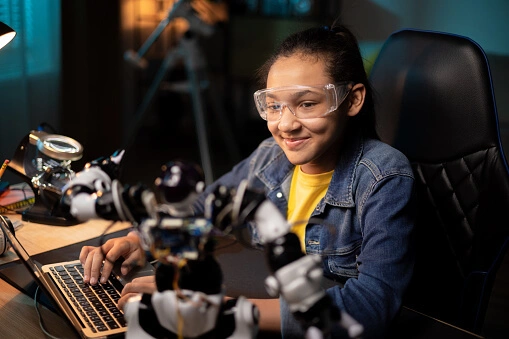
Naman Pushp: A 21-year-old founder building the future of delivery
While most people in their early twenties are still figuring out internships or polishing their resumes, 21-year-old entrepreneur Naman Pushp is building something far more ambitious.
Naman Pushp's company, Airbound, is developing drones designed to dramatically reduce the cost of last-mile delivery. The startup previously raised nearly $10Mn in funding already from prominent investors like Lightspeed Venture Partners and others.
But the most remarkable part of this story is not the funding. It is how early the journey began. Read more about his inspiring journey which he shared in a chat with Pavan Ponnaganti, the founder and CEO of Playto Labs.
A robotics journey that started in elementary school
Naman Pushp's introduction to robotics happened very early in life.
While living in Malaysia, Naman began building robots in 5th and 6th grade. These early robots were simple, often using ultrasonic sensors to detect obstacles, but they sparked something important: curiosity.
When he later moved back to India around 6th grade, his interest deepened. By 8th grade, Naman was already participating in school robotics competitions. And the more he built, the more fascinated he became with hardware and engineering.
Soon he moved beyond Lego and other robotics kits. Instead of relying on pre-assembled parts, he began experimenting with steel, aluminium, electronics, and mechanical components, building robots completely from scratch based on his own imagination.
For him, robotics became a way to learn by building. And that learning mostly happened outside the classroom.
Why early hands-on building matters
Stories like Naman’s show how powerful early hands-on learning can be. When students start building, experimenting, and solving problems early in life, those experiences often become the foundation for deeper skills, confidence, and real innovation.
At Playto Labs, we believe that children learn technology best not by memorizing concepts, but by building real projects with their own hands. When students design robots, experiment with sensors, and solve problems themselves, they develop skills that go far beyond classroom theory.
Experiences like these help students build curiosity, confidence, and real engineering thinking, the kind of skills that often matter far more than simply collecting degrees.
If you want your child to experience the same kind of hands-on learning journey, you can explore what students are building at Playto Labs.
Learning far beyond school
When the COVID pandemic hit during his 10th and 11th grades, schools shut down and schedules suddenly opened up. Instead of slowing down, he used the time to learn aggressively.
During this time, Naman taught himself:
- CAD design
- Mechanical engineering concepts
- Online robotics courses
- Advanced engineering tools
He also joined online communities of builders and innovators, where people around the world were sharing ideas and projects.
This exposure changed his mindset. Through robotics events and engineering communities, he began meeting founders, engineers, and builders, people who were actually creating companies and technologies.
That made him realize something important: "If they can build things like this, why can't I?"
The moment that sparked the idea
Around this time, Naman came across the work of Zipline, the drone delivery company operating in Africa. Zipline was using drones to deliver medical supplies to remote areas.
The idea immediately fascinated him. But instead of simply admiring the technology, he asked himself a simple question: "Why can't I build something like this?"
Initially, his goal was not even to build a company. He wanted to design an open-source drone platform that other innovators could build on. His idea was to create a drone design that anyone could take, modify, and experiment with.
It started as a passion project. But once he started building, he realized something. Drone engineering was far more complex than it seemed. And if he wanted to make it truly useful, he would have to go much deeper.
The first drone - built at 16
Naman presented his early drone concept, which he called the Open Drone, at a hackathon. There, he won his first prize - $500. He used that prize money to build his first serious drone prototype.
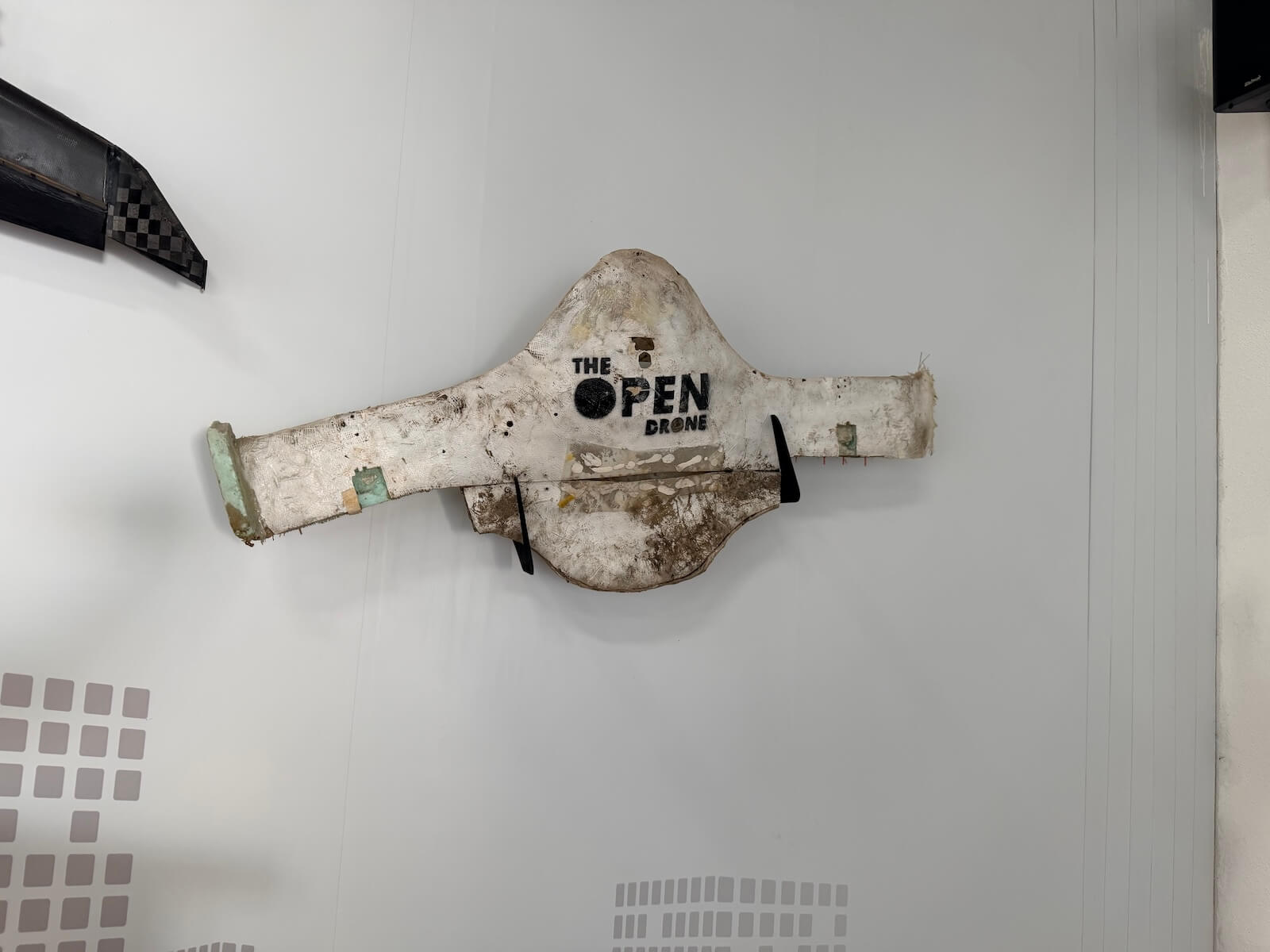
Today, that Open Drone still hangs on the wall in the Airbound office. It is more than just a memory. It represents the beginning of everything.
In fact, the core architecture of Airbound's current drone is still based on ideas from that early Open Drone prototype he built at 16 years old.
Early believers
Soon after, Naman received a $1,000 grant from the 1517 Fund, a venture fund known for backing young founders, including students who choose to drop out of college to build companies.
Over the next two years, he continued building and refining the technology.
While still in 11th grade, he raised $25,000 from Grad Capital at a valuation of $625,000. Soon after, he secured another $12,000 from Emergent Ventures.
Remarkably, he did not take any money from his parents. Instead, Naman chose to live independently and focus entirely on building drones.
From a hobby to a venture-backed company
In 2023, Airbound raised $1.5 million from Lightspeed Venture Partners and then another $8.5 million from Lachy Groom, Humba Ventures, and other senior leaders at Tesla, SpaceX, and Anduril.
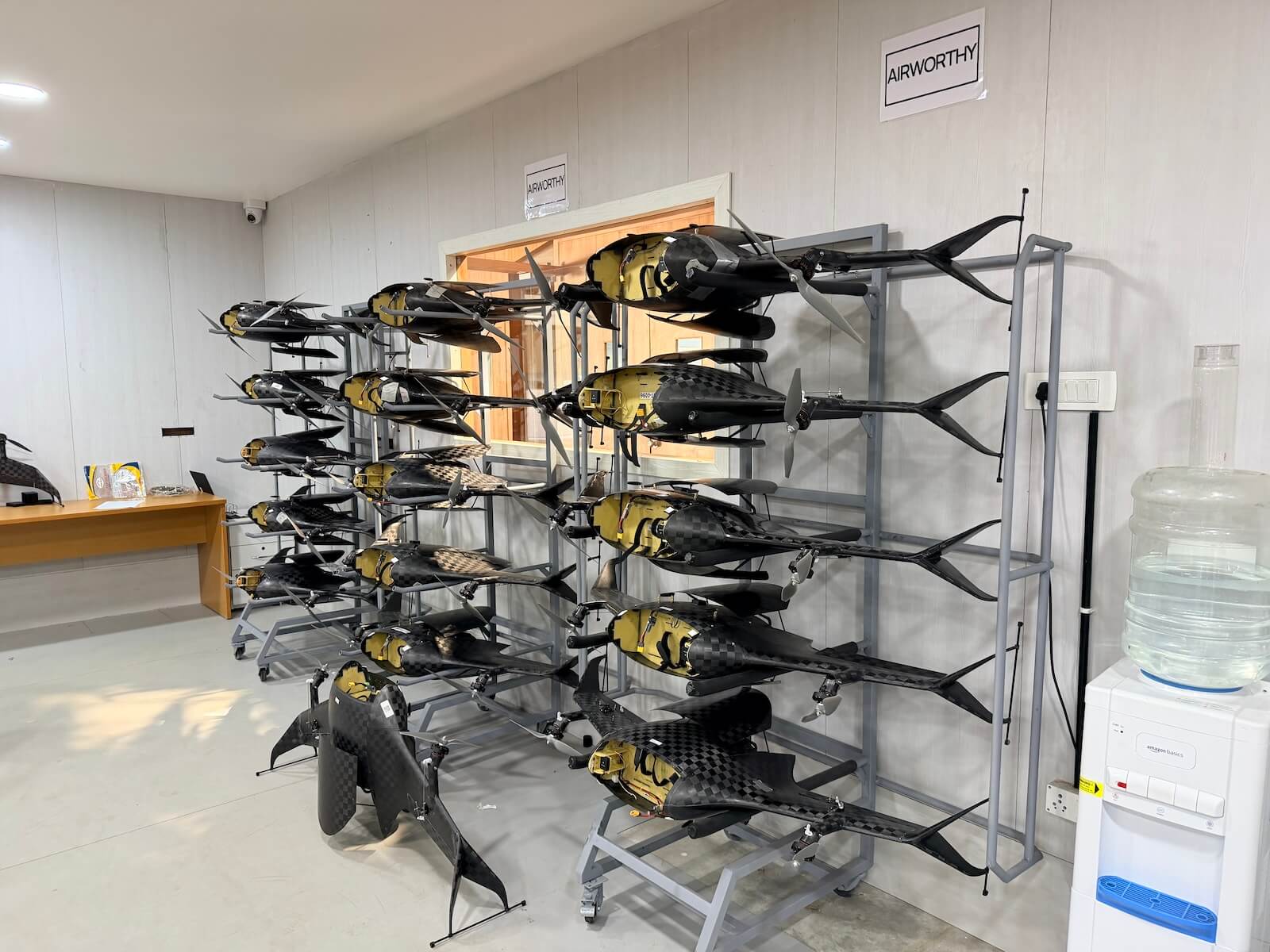
By this point, the vision had evolved dramatically. The company was no longer simply building drones. It was trying to solve a fundamental inefficiency in logistics.
The real problem: last-mile delivery
Today, delivering a small parcel is surprisingly inefficient.
To deliver a 1 kg package, the logistics system often uses:
- an 80 kg delivery rider
- riding a 120 kg motorcycle
In other words, nearly 200 kg of mass is being moved to deliver less than 1 kg of payload. That is a huge waste of energy.
Airbound is trying to change that. Instead of moving 200 kg each time for delivery, their goal is to move a 2 kg drone a 100 times with the same amount of energy - because energy needed depends on the mass being moved. A drone weighing around 2 kg could carry small packages directly to homes. This dramatically reduces the amount of energy required.
Today, last-mile delivery costs roughly Rs.2 per kilometre. Airbound's goal is to bring that down to just 10 paise per kilometre.
If achieved, this could represent a 100x improvement in efficiency.
Engineering the drone differently
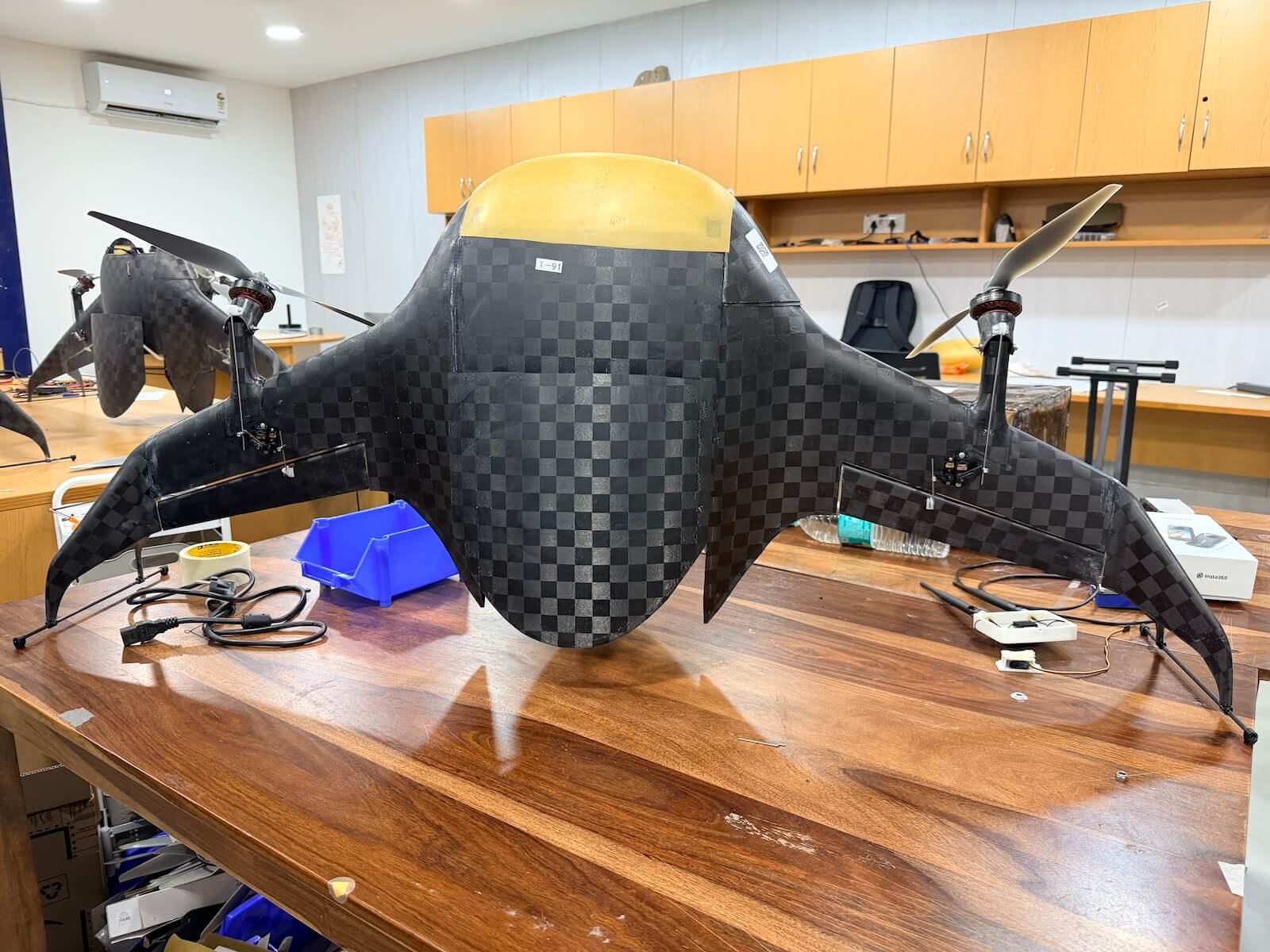
To achieve this, Airbound is developing a unique drone architecture:
- Blended wing body design
- Tail-sitter configuration
- Highly optimized for efficiency and cost per kilometre
Interestingly, the founder is very clear about something. He does not try to optimize everything at once.
For example, he openly admits that the drone's lift-to-drag ratio is not perfect yet. But that is not the priority right now.
"The most important thing is solving the core problem first.", says Naman and he developed this clarity not by reading books but by doing this hands-on and understanding that living with short-term inefficiencies is a necessary evil to achieve the long-term goal. Most people develop this clarity only after years of experience and learning from mistakes. But Naman developed it at a very young age, thanks to his early exposure to building real things and learning from mistakes. This is why investors are so bullish on him and his company.
"Lego kind of Kits are useful when kids are very young. But as they grow older, they should build using real materials and their own ideas.", says Naman. Only when students build real systems do they understand engineering trade-offs and develop clarity of thinking.
This clarity helped shape Airbound's evolving pitch. At first, the idea was simply building drone delivery technology. Over time, it became much sharper. Now the company's mission is clear: make last-mile delivery radically cheaper.
Reimagining how cities work
If delivery becomes extremely cheap, it could change how cities function.
Naman explains this with a simple example. Today, restaurants need to place kitchens very close to dining areas. But if ultra-cheap drone delivery becomes possible, kitchens could be located elsewhere, optimized purely for efficiency, while dining spaces could be designed for ambience and experience.
In other words, logistics could start behaving like cloud computing. Just as cloud infrastructure allows data to move freely, Airbound's vision is to move physical objects like digital bits.
Invisible infrastructure
But there is another design goal. The drones must be minimally invasive. They should not disrupt everyday life.
That means:
- Low noise
- Flying at higher altitudes
- Minimal disturbance to people on the ground
In other words, the system should work quietly in the background. Just like the internet.
Early pilots
Airbound has already begun pilot projects, including work with health clinics in Bommasandra, Bangalore. These pilots are helping the team test real-world deployments and refine the system.
The mindset behind the innovation
One trait stands out in Naman's thinking. He constantly asks: "Why doesn't this work?" and "How can we make it work?"
Instead of accepting limitations, he treats them as engineering problems waiting to be solved. That mindset, curiosity combined with persistence, is what drives real innovation.
A bigger dream for India
Perhaps the most inspiring part of the conversation was his outlook on India.
For decades, much of the narrative around Indian technology has been about catching up with the rest of the world. He disagrees with that mindset.
"India should not just dream about catching up. We should aim to be the best in the world.", he says.
That belief is what drives him. And he is pursuing it long before most people his age even start their careers.
What students (and parents) can learn from this story
There is a powerful lesson in this journey.
This founder did not start with funding, connections, or a grand master plan. He started with:
- Curiosity
- Building things
- Experimenting
- Participating in competitions
- Learning online
- Meeting other builders
Step by step, those experiences built skills, confidence, and vision. And it all began with something simple: a child building robots in school.
If you want children to grow into innovators, entrepreneurs, and engineers, the most important thing they need is exposure to building real things.
Robotics is one of the most powerful ways to spark that journey. Parents who are curious about how to get started can explore Robotics for Kids and Robotics for Teens, and also read our Robotics for Beginners guide to understand how kids and teens begin learning robotics step by step.
And sometimes, those experiments grow into companies that change the world.
Students can achieve remarkable things when they start building early
Stories like Naman’s show what can happen when students start building and experimenting early in life. Over time, those small projects often become the foundation for deeper skills, confidence, and real innovation.
At Playto Labs, students regularly design and build robots, autonomous vehicles, drones, and smart systems while still in school. Through hands-on experimentation, they learn how to solve real engineering problems and turn ideas into working prototypes.
You can explore some of the innovative projects built by students on our Student Achievements page.
About Playto Labs
Playto Labs is a global robotics and technology learning platform for students aged 8–16. The company was founded on a simple belief: children learn best when they build real things.
Instead of focusing only on theory, Playto programs encourage students to design and build projects using real materials, electronics, and sensors. Students create robots, autonomous vehicles, drones, and smart systems while learning engineering concepts through hands-on experimentation.
Over the years, thousands of students from around the world have built innovative projects through Playto Labs programs and competitions.
If your child is curious about technology and building things, a good starting point is understanding what Robotics for Kids involves, how Robotics for Teens builds on those concepts, and how beginners start learning robotics through projects. Our Robotics for Beginners explains the fundamentals. Once you’re ready to take the next step, you can explore some of Playto Labs’ learning programs: